
Productividad
How AI Is Supporting Healthcare Workflows in 2026
Publicado:
21 ene 2026

In 2024, the conversation around AI in healthcare clinics was dominated by hype and fear. Clinicians worried about replacement, while administrators searched for “magic” solutions.
By 2026, much of that noise has faded. What remains is a quieter and more practical use of AI in clinical settings. Rather than reshaping medicine, AI has begun to support functions that improve the patient experience and reduce the day-to-day burden on clinical teams.
The clinics seeing the most value are using AI to remove administrative friction that has steadily eroded time, attention, and capacity across the system.
Below are five ways AI is being adopted across healthcare, from dental practices and physiotherapy clinics to hospitals and family practices.
5 Ways AI Is Being Adopted In Healthcare
1. AI at the Digital Front Door
For many clinics, AI now sits where patients first arrive: on the phone, in a chat window, or inside an intake form.
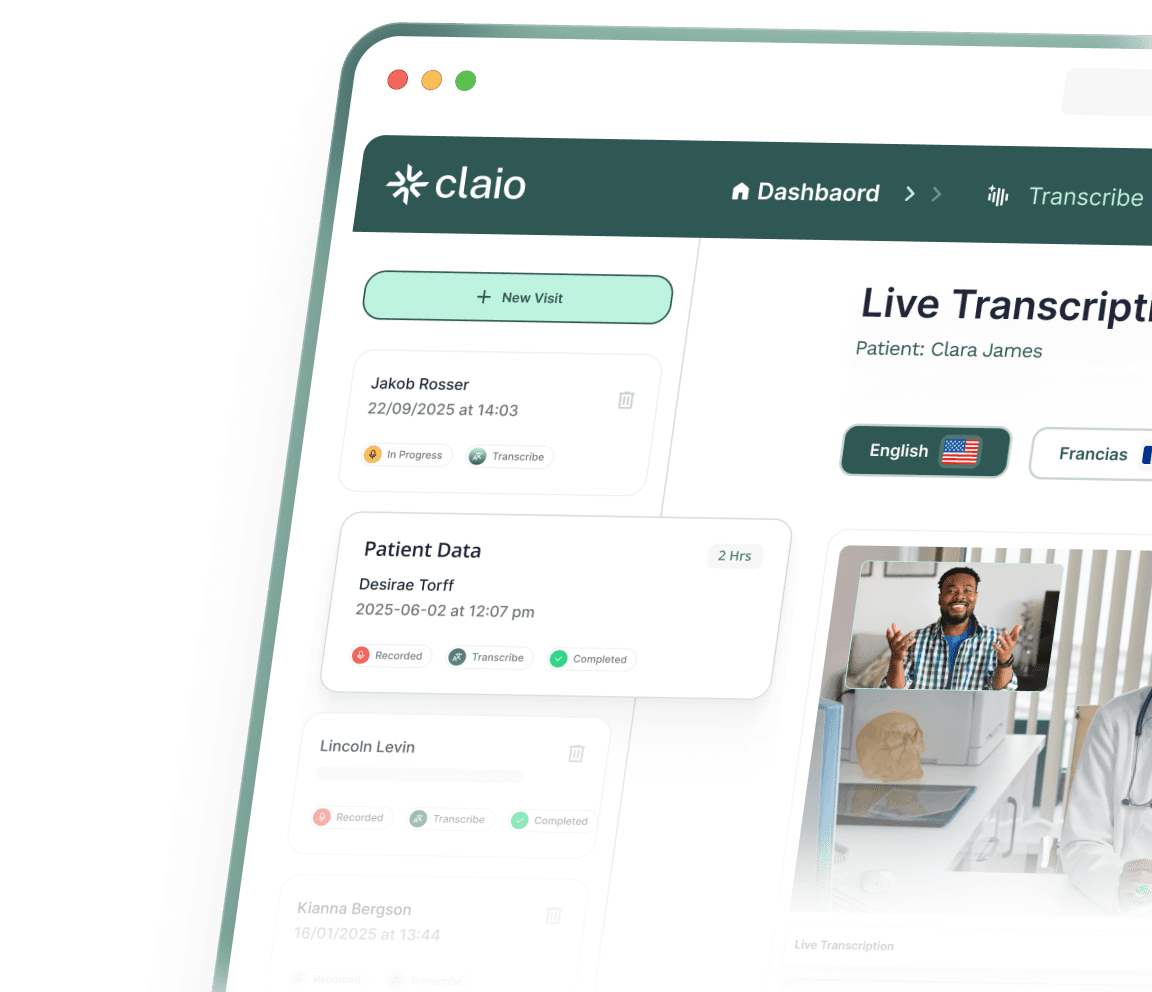
AI receptionists and virtual agents can answer calls, handle messages, route requests, and book appointments directly into the schedule. Instead of waiting on hold or leaving a voicemail, patients explain what they need. Systems like Claio move things along or hand off when they should.
The OHA quotes AI voice technology as being able to “cut down on patient frustration, since calls are always answered by a friendly, helpful AI voice with infinite time and patience”.
Some clinics extend this further by using AI-powered intake and symptom collection before a visit begins.
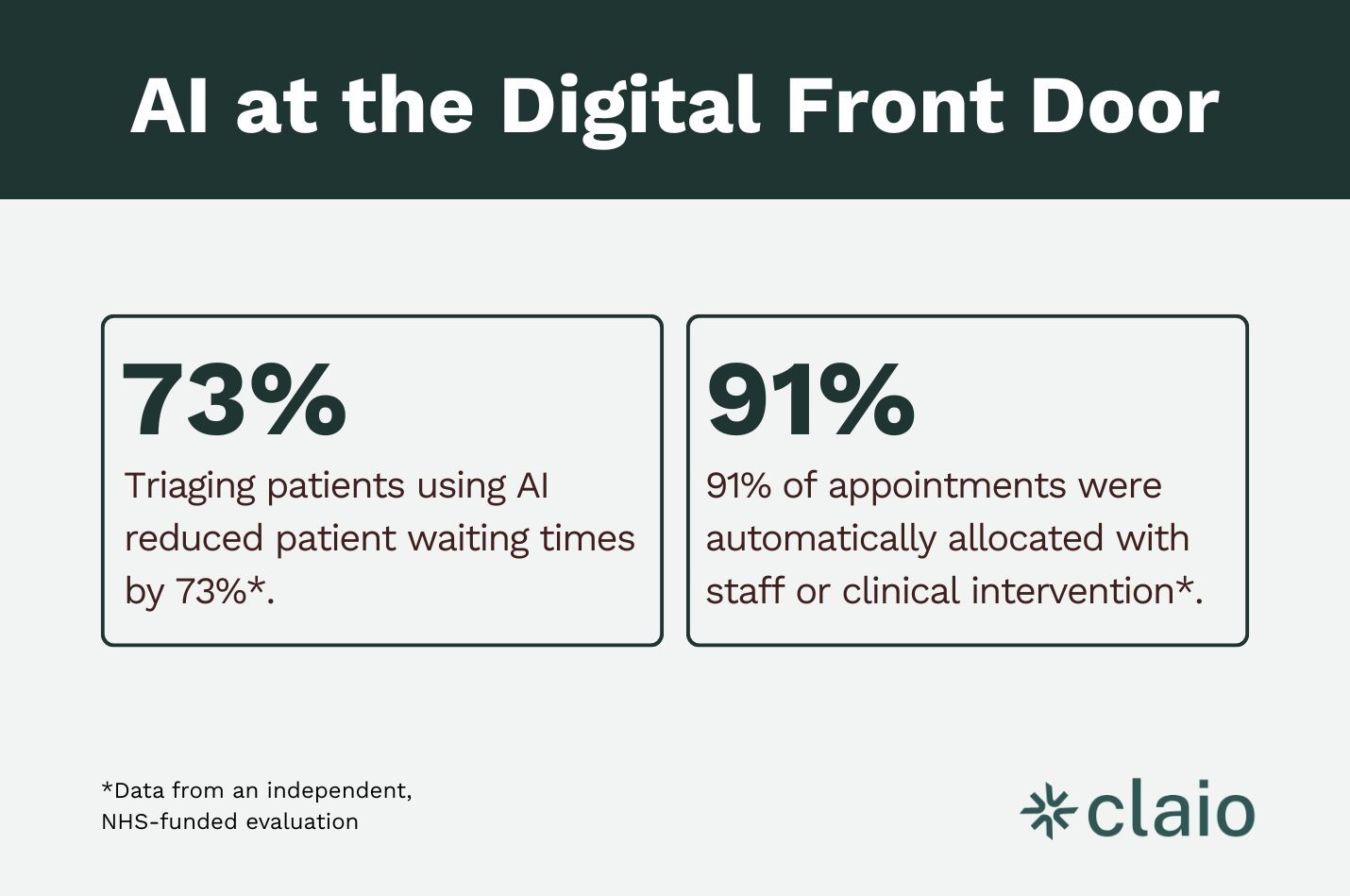
Chief complaints and urgency are captured early, often through patient portals or telehealth tools, so staff and clinicians don’t have to start from scratch. An independent, NHS-funded evaluation in the UK found that triaging patients using AI reduced patient waiting times by 73%, and 91% of appointments were automatically allocated with staff or clinical intervention.
2. AI Scribe in the Exam Room
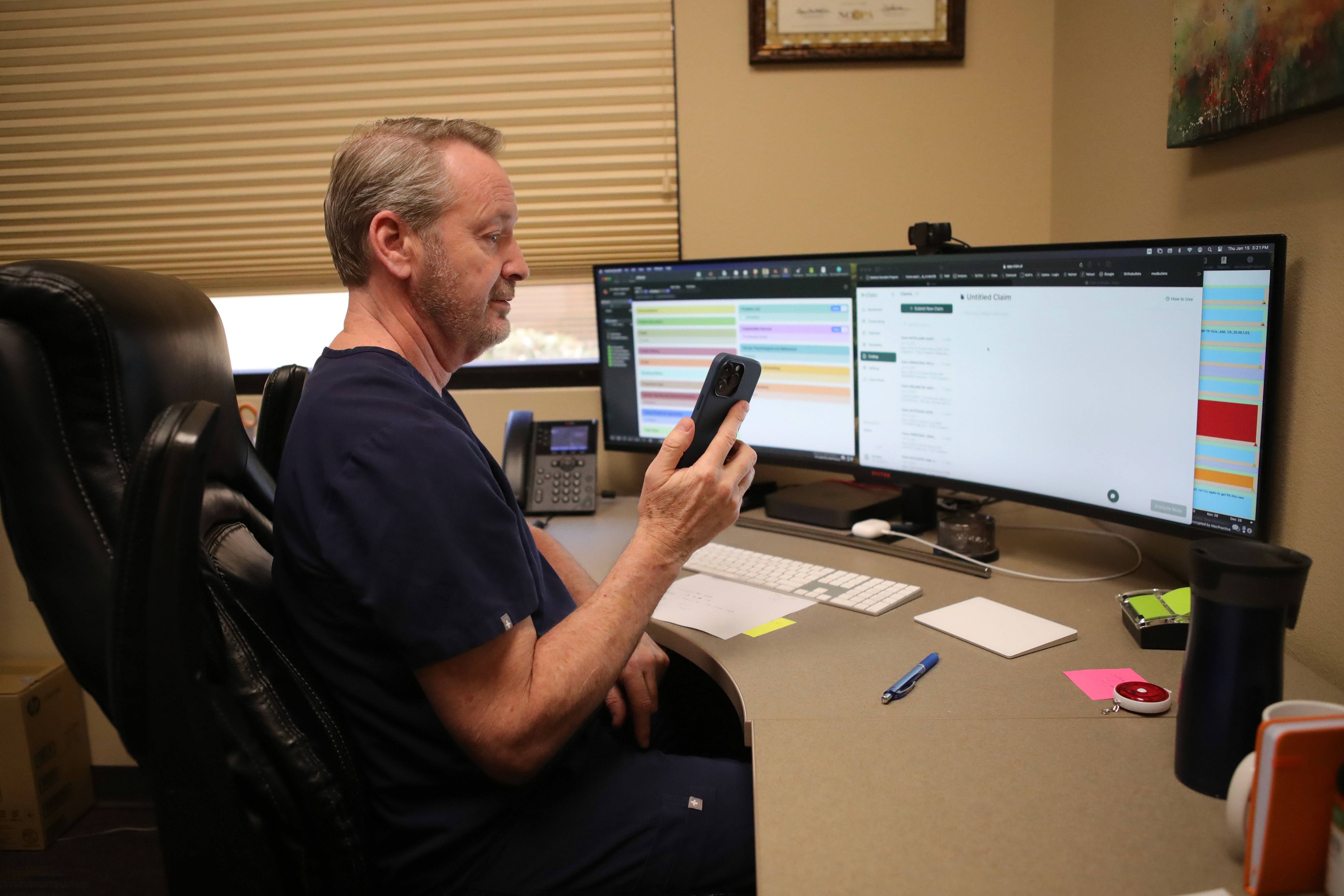
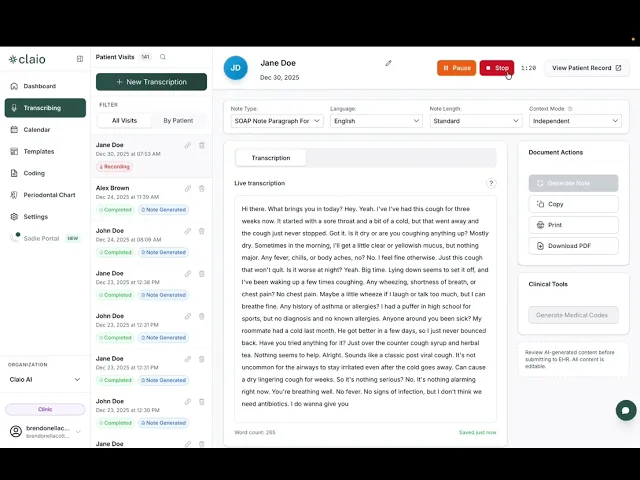
AI Scribes listen during the visit and generate clinical notes in the background, capturing the conversation as it happens. Clinicians review and edit documentation rather than writing from scratch, shifting their attention back to the patient rather than the screen.
The Phillips Future Health Index 2025 reported that 35% of healthcare professionals reported spending less time with patients and more time on administrative tasks. This is exactly the type of issue AI medical scribes were created to resolve.
The appeal of AI medical scribes comes from reducing the volume of manual work clinicians are expected to complete after the visit. Medical professionals will have fewer unfinished notes at the end of the day.
You’ll see that documentation is created in real time, then reviewed and finalized by the clinician.
When AI works best, medical professionals and the patient-clinician interaction feels more focused, and the administrative burden that follows the appointment is noticeably lighter.
3. Decision Support, Diagnostics, and Prescribing
The American Medical Association reports that nearly two-thirds of physicians used AI in 2025, a 78% increase from 2023.
In 2026, that adoption curve shows no signs of slowing as 80% of medical professionals say they see AI as a way to augment their decision-making. Rather than replacing judgment, these systems surface patterns, reminders, and risk signals that might otherwise be missed.
They flag potential drug interactions, suggest diagnostic considerations, or highlight gaps based on guidelines and prior history, leaving the final call to the clinician.
In practice, AI supports consistency and recall in busy clinical settings, without shifting responsibility away from the provider.
4. AI-Powered Remote and Chronic Care
Outside the clinic walls, AI is increasingly used to support ongoing care.
The AI in remote patient monitoring (RPM) market was valued at USD 2 billion in 2024 and is projected to grow at roughly 26–27% annually over the next decade.
For patients managing chronic conditions, AI helps monitor symptoms, track adherence, and surface changes that may need attention. Routine check-ins, reminders, and data collection happen in the background, often integrated into remote monitoring programs and telehealth workflows.
Medical researchers argue that AI can help predict deterioration earlier, enabling preemptive outreach in low‑resource settings and, in theory, reducing hospitalizations and complications.
AI helps care teams identify issues earlier and focus in-person time on moments that genuinely require clinical intervention.
5. Operations, Billing, and the Back Office
Behind the scenes, AI is being used to keep clinics running smoothly.
We’ve already seen how AI can act as the digital front door, but AI systems can go beyond answering phone calls and support operations and billing.
Claio’s AI medical coding assistant reviews clinical documentation in real time, flags incomplete notes, surfaces coding issues, and suggests more accurate ICD‑10 and CPT codes so staff are not stuck doing manual lookups or rework. By catching problems before claims go out, AI can reduce back-and-forth with payors and cut delays that slow reimbursement.
This results in a more organized front office as staff spend less time fixing avoidable problems and more time on work that actually benefits patients and the practice, while still making the final decisions on codes and exceptions.
The Role AI Is Settling Into
AI’s role in healthcare clinics is becoming clearer; its value is in supporting the systems that surround it.
Across clinical settings, AI is being used to reduce friction, eliminate repetition, and give clinicians and staff back time without demanding attention in return.
The most effective implementations are deliberate and designed to fit existing workflows rather than disrupt them. As AI becomes more common in clinical settings, success will be measured less by novelty and more by reliability.
The technology that lasts will be the kind that quietly does its job, improves access and efficiency, and leaves the practice of healthcare where it belongs: in human hands.
Where Claio Fits
Claio is built for the parts of clinical work that don’t require judgment, but still demand accuracy, consistency, and trust. From AI reception and intake to ambient documentation and coding support, Claio helps clinics reduce administrative friction without changing how care decisions are made.
If you’re exploring how AI can support your clinic without adding complexity, Claio is designed to quietly and reliably fit into existing workflows.
Start a free trial and learn more about how Claio supports real clinical operations

¿Listo para simplificar tu documentación?
Únete a cientos de proveedores de atención médica que ahorran tiempo con notas clínicas impulsadas por IA y aumentan su productividad.